Reflections from the Land Justice Futures Gathering in Detroit
Celebrating Catholic Sisters Participating in Land Justice
written by Jason Patten
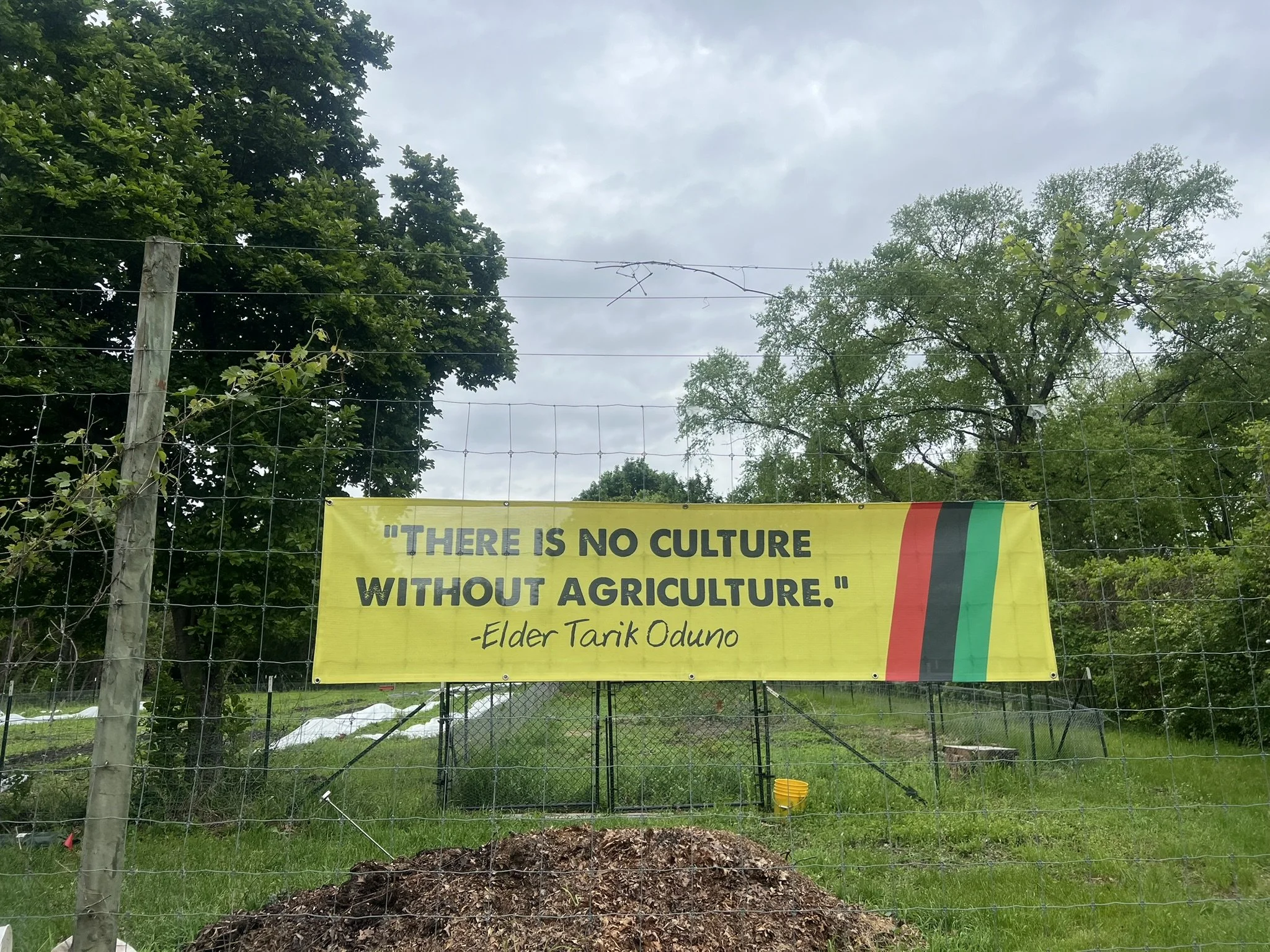
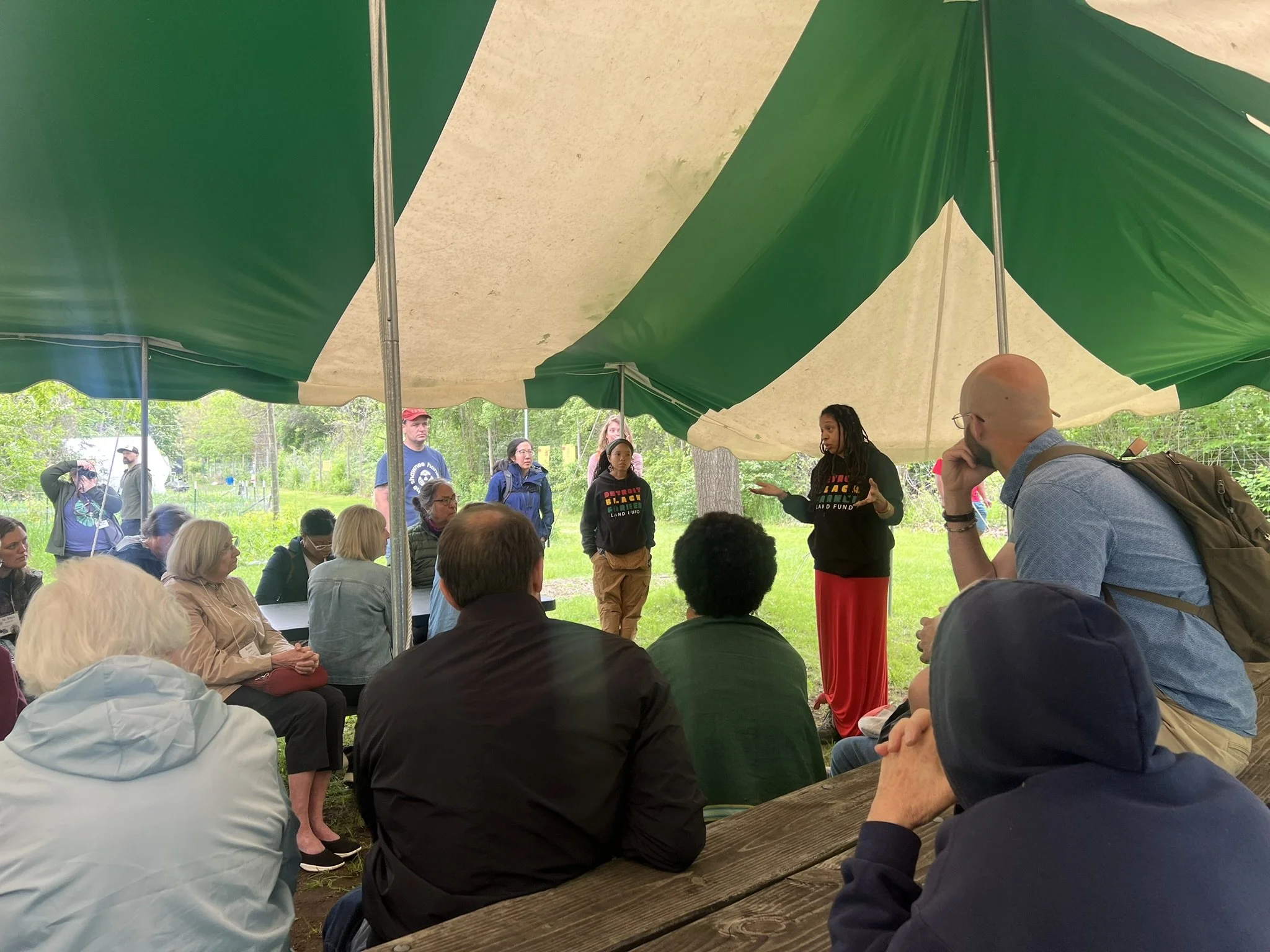
On a peaceful Wednesday morning in May, in the damp, verdant landscape of D-Town Farm, a Black-led community farming project nestled within Detroit’s largest public park, there is a surprising procession crossing the dew-soaked grass.
Catholic nuns.
Most are dressed plainly, indistinguishable from anyone else arriving on a spring morning. Elder women moving quietly among rows of growing food. Around them are myriad garden beds, mounds of mulch and compost, and canopy-covered meeting spaces. The farm feels less like a workplace and more like a living community sustained by relationships, shared purpose, and care.
The Sisters have come as part of a gathering organized by Land Justice Futures, a sibling organization to the Center for Ethical Land Transition that supports women religious in exploring their role within the ever-growing Land justice movement. They are here to listen, learn, and witness. Their hosts that day at D-Town Farm, the Joy Project, and Detroit People's Food Co-op are sharing stories about land, food, history, and what self-determination and community investment look like in practice.
What the sisters encountered that morning was a living example of what Land justice can look like for Black communities. Conversations about Land can sometimes focus narrowly on title-holding, also known as “ownership.” But as witnessed on this day in Detroit, Land justice reveals itself through relationships of care, responsibility, and mutual investment: community farms, Black-owned cooperatives, networks of growers, educators, organizers, and entrepreneurs, and artists working together to strengthen food sovereignty and community resilience.
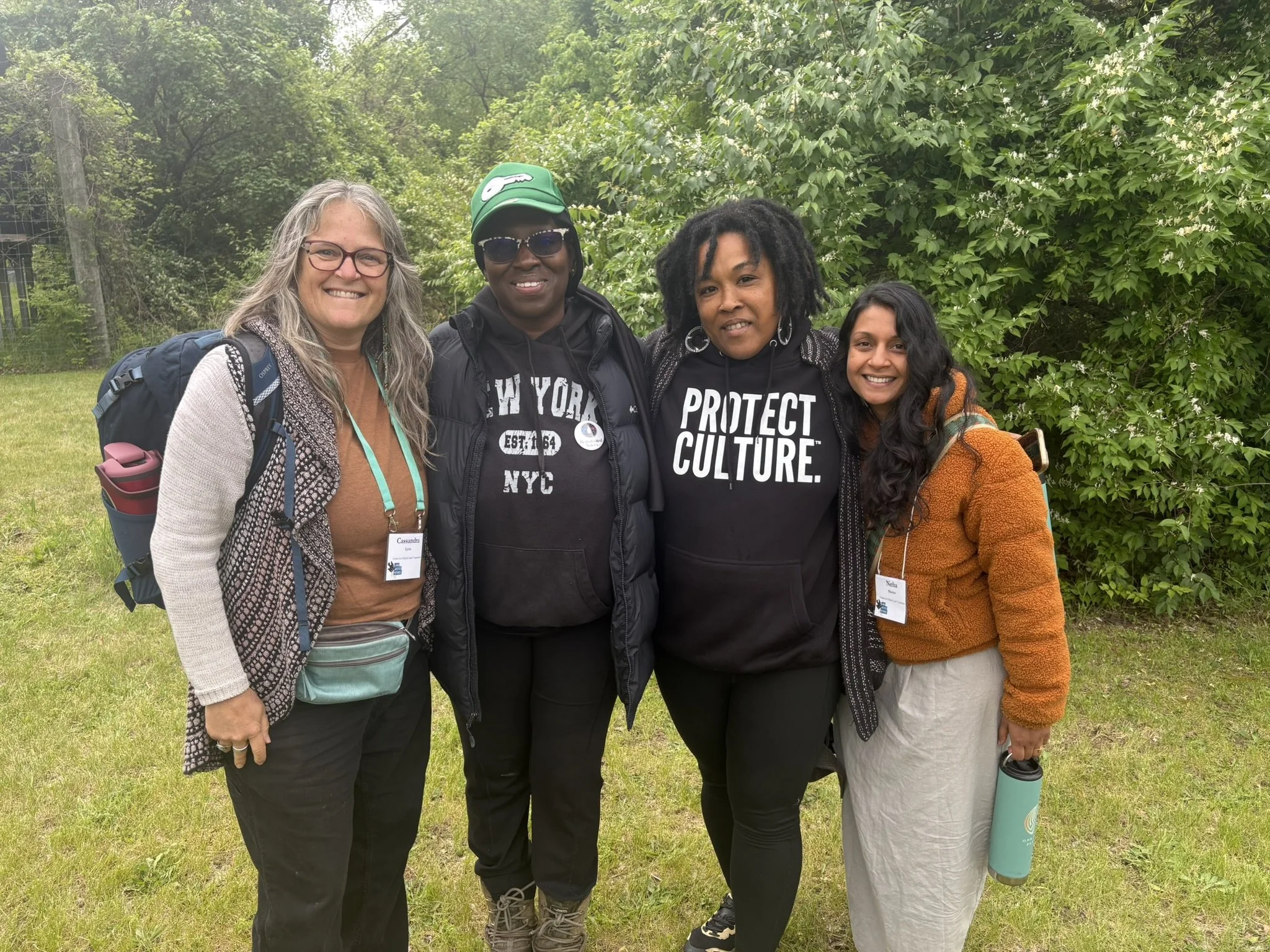
Cassandra Lynn, Mama Asha Ellis, Abi Huff, Neha Sharma visiting D-Town Farm (DBCFSN.org)
This work exists within a larger historical context. Earlier this year, the City of Detroit released a Reparations Recommendations Report, documenting generations of policies and practices that systematically harmed Black Detroiters through housing discrimination, economic exclusion, displacement, environmental injustice, and unequal access to opportunity. The effects these legacies have, in Detroit and everywhere in the US, are ongoing. The Detroit Reparations Report asks what healing might require, and what investments, resources, and commitments are needed to address the enduring consequences of those harms.
Organizations like the Detroit Food Commons offer one answer. The Detroit Food Commons describes itself as "a community-owned food hub and cooperative development [which] serves as a center for food sovereignty, local entrepreneurship, and cooperative economics, advancing equitable access to healthy food and wealth-building for residents.” The Detroit Food Commons is part of the National Black Food & Justice Alliance, an alliance of organizations supporting land justice, food sovereignty, and climate resiliency through models of self-determination of collective building. For the Sisters visiting on this day, they get to see first hand what it means to cultivate the conditions for communities to flourish through food, local economies, cultural belonging, and spaces of collective care.
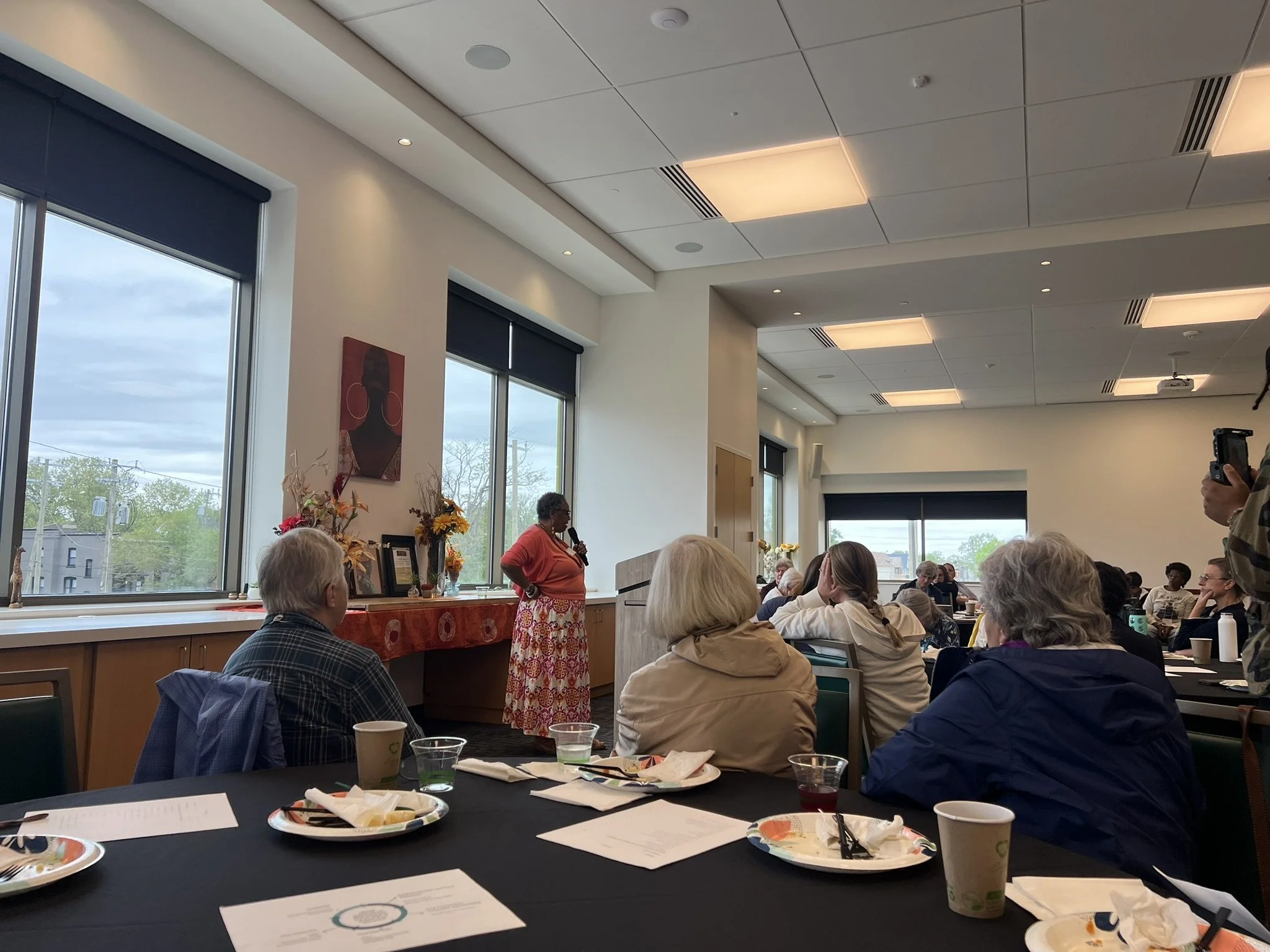
Mama Desiree Ferguson shares the history of Detroit through the lens of her research for the Detroit Reparations Taskforce.
Witnessing efforts like these helps illuminate why the work of Land Justice Futures exists in the first place.
Over the last several years, Land Justice Futures has been cultivating cohorts of women religious willing to engage difficult questions about history, responsibility, and repair. Participants are invited to examine the legacies of harm enacted through colonization, Indigenous boarding schools, land dispossession, and other systems that tried to sever people from land, culture, community, and belonging. This work is meant to serve the outcome of transitioning land back to the stewardship of Black and Indigenous communities, as well as others directly harmed by the legacies of colonization.
At this fourth annual retreat hosted by Land Justice Futures, the work has begun to bear fruit through Land Return and Reparations. In 2025, Land Justice Futures supported the successful return of Land to the Lac du Flambeau Band of Lake Superior Chippewa from the Franciscan Sisters of Perpetual Adoration. The return represented years of internal discernment among the Sisters, relationship-building, and persistence. At the 2026 gathering, we celebrated that four more congregations of women religious are at major thresholds of possible land reunions.
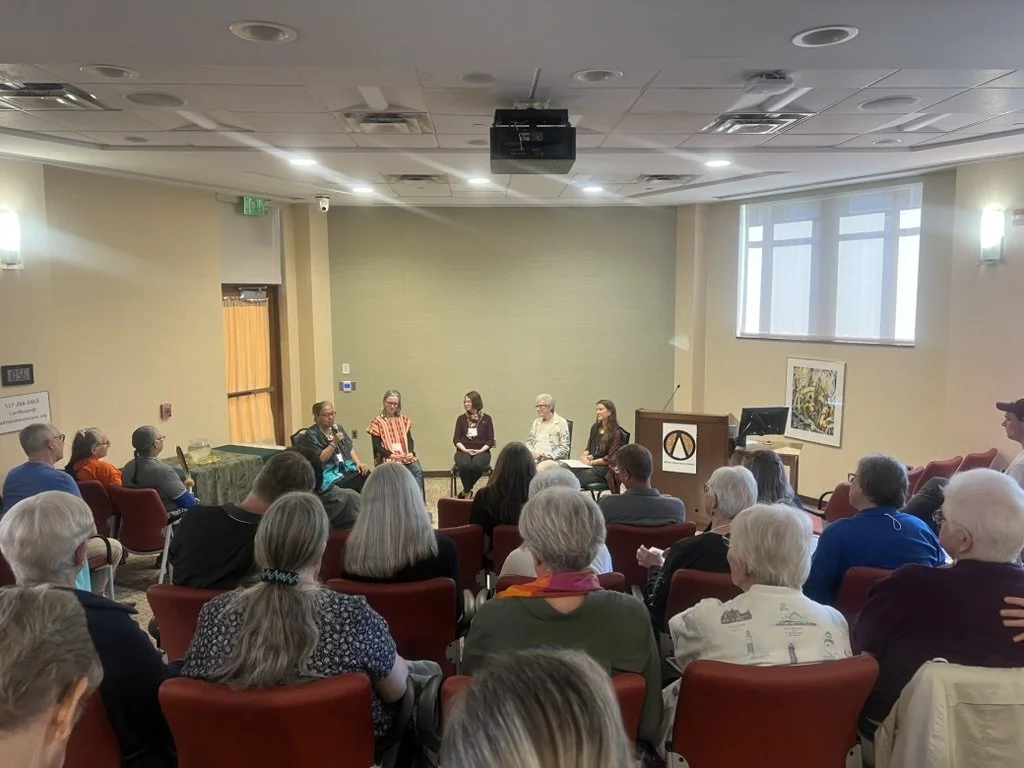
A panel sharing details and reflections about the Lac du Flambeau Land return.
At the Center for Ethical Land Transition, we get to witness how the Land Justice movement is truly a movement: a movement happens together, with different elements creating momentum and inviting more people to participate. One landmark success, like the Lac du Flambeau Land return, invites others to imagine what may be possible. Over time, more progress in the movement feels increasingly possible.
Coming into right relationship is a process of acknowledging the harms and traumas that have taken place between humans and the land, and with each other. This means focusing not just on the transaction of title transfer, but recognizing that the relationships we have with ourselves, our communities, other communities, and the land itself hold the power for transformation. As Brittany Koteles, Executive Director of Land Justice Futures, says, "We are in a spiritual practice of repair together."
Just a few years ago, it seemed unlikely that Catholic Sisters would engage so directly with the Land justice movement. But standing among farmers, organizers, Indigenous leaders, Black community leaders, and women religious in Detroit, we celebrate the work that has already been done, and the ongoing efforts to catalyze more relationship building and Land transitions. We look forward to the work ahead, and the future those in the Land justice movement are creating together.